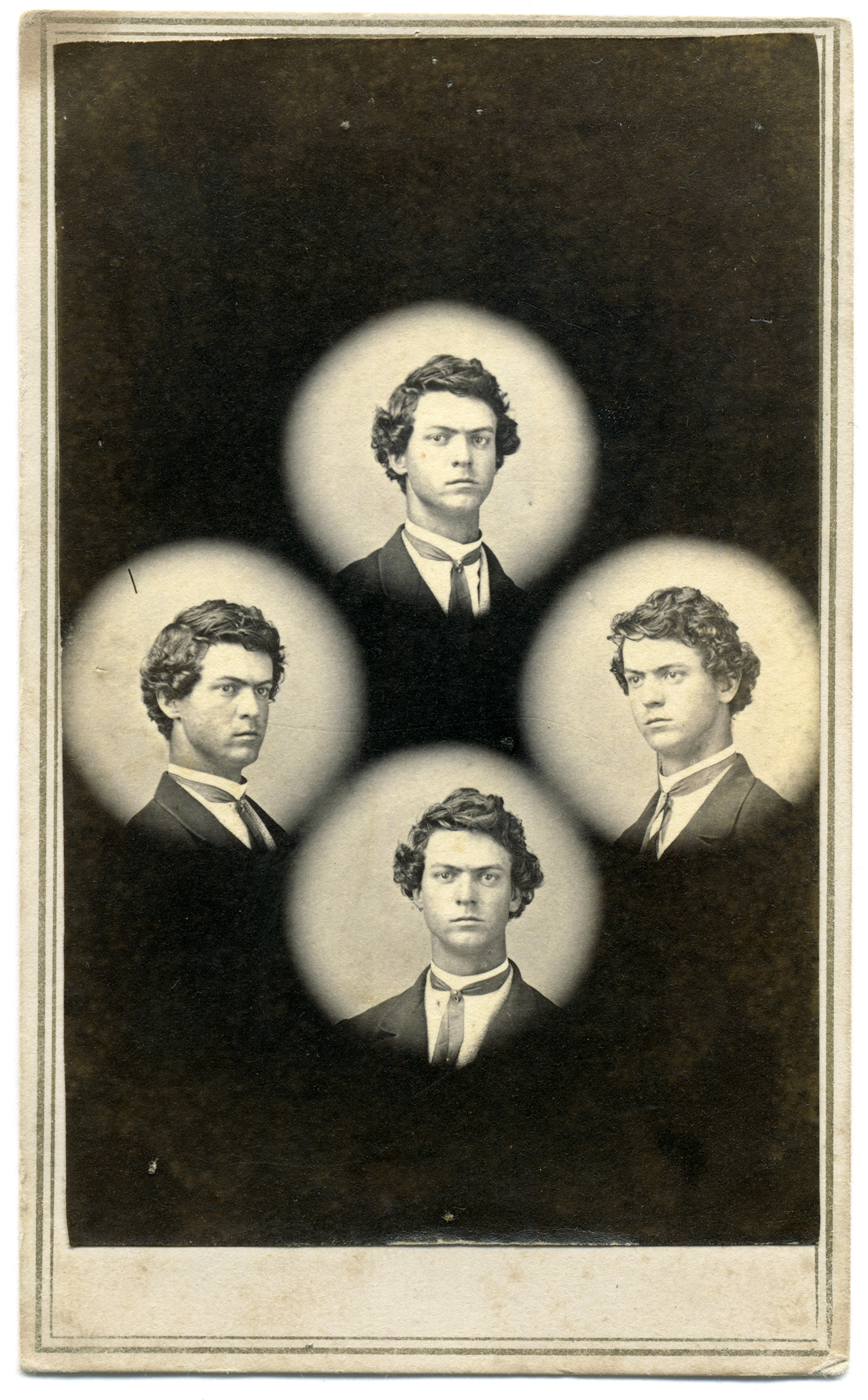
Diamond Cameo Photographs.
We have another novelty to bring under the attention of our readers which will at once arrest the attention of portraitists. We have frequently heard the opinion expressed of late that the carteomania was on the wane, that everybody had obtained his card picture, that the albums were full, and the public beginning to be sated. No doubt, this is, in some quarters, to some extent true. The question has been asked, What will be the next fashion? In answer to this question, solar camera pictures, or other enlargements, have been doubtfully mentioned. These, it is very probable, will come into increased demand: but the demand can never become a rage at all similar to that which has existed during the last few years for card pictures. The price and size at once preclude the possibility. To take the place of cards, for which the demand begins to flag, the picture must be as cheap, as easily exchanged and preserved, and at least as pretty. The novelty we have to announce more than fulfills these conditions.
The Diamond Cameo Portrait, introduced by Mr. F. R. Windowwhose interesting communications to these pages are familiar to our readersor more properly by the firm of Window &. Bridge, will, we think, give a new impetus to photographic portraiture. The size is the same as that of the card picture, the cost of production is no greater, whilst in beauty, likeness, variety of interest, and force of effect, it is superior to most phrases of portraiture. The picture, as issued by Messrs. Window dc Bridge, is of the size of an ordinary card, and contains four portraits, each giving a different view of the face. Each portrait consists of a bust about an inch long, and three-quarters of an inch wide: two are side by side in the middle of the card, and two at the top and bottom, arranged in this order. The top and bottom generally consist of a front face view and a three-quarter face view; whilst the others consist either of two entire profiles, one of the left and one of the right side of the face, or of a profile of one side, and a five-eighths view of the other; but, of course, much variety in this respect is possible. But the especial peculiarity, and that which gives the cameo effect of the picture, is yet to be described:the oval containing each bust is punched into relief, so as to have a convex surface. The effect of this is giving the illusion of roundness and relief to the whole image, cannot be readily imagined by a person who has not seen it. It is difficult at first glance to believe that the features have not a special relief of their own, and the cameo effect is perfect.Such a style of portraiture has many real charms and points of interest, besides that of novelty. A1most all the artistic difficulties which beset the photographer are got rid of. The graceful arrangement of hands and legs, and their delineation in anything like true proportion and in good definition, cease to distract the mind. Each small head is taken with the center of the lens, and is unexceptionable in definition; and as the full aperture of the lens may be used without hesitation, the exposure is so rapid that there is no difficulty in obtaining good expressions, an end which is further aided by the entire absence of all torture in the way of arranging awkward limbs, a process so frequently fatal to a pleasant or natural expression in the face. As to the question of likeness and verisimilitude, the interest of this style of picture must at once commend itself to every one. There are few people who have not two or more aspects of the face with greater or less degree of dissimilarity, and it not unfrequently happens that the view which is most pleasing as a picture, is least striking as a likeness. The photographer in producing the picture, is thus placed between the horns of a dilemma; if he produce the pleasing picture, candid critics remark, Very pretty, but certainly not strikingly like, or, if he secure the striking portrait, the equally candid opinion is, Very like, but certainly not flattering. In this phase of portraiture, there are four aspects, all under the eye at once. The mind rapidly and unconsciously combines these, and perceives the complete embodiment of the original in its natural aspect; a general rather than a specific likeness, a complete rather than a partial portrait. There is, moreover, in such pictures an entire absence of all vulgarity, the effect being quiet, classical, and artistic.
We have not space now to enter into a detailed description of the mechanical arrangement employed in getting the best result with the least trouble. A very ingeniously-contrived dark slide has very simple movements for obtaining the four portraits in their due positions, and of the right size on the plate. When printed and mounted, the convexity of each disk is produced by means of a steel punch and an arming press, which is worked very quickly. The exquisite surface given by the face of the die to the picture, far exceeds that produced by rolling.
The general effect is that of four cameos or enamels dropped on the card. We understand that the demand for them since their introduction has been very rapid, and they have elicited high encomiums from the highest personage in the realmLondon Photographic News.
