E.L. Clementn.d.
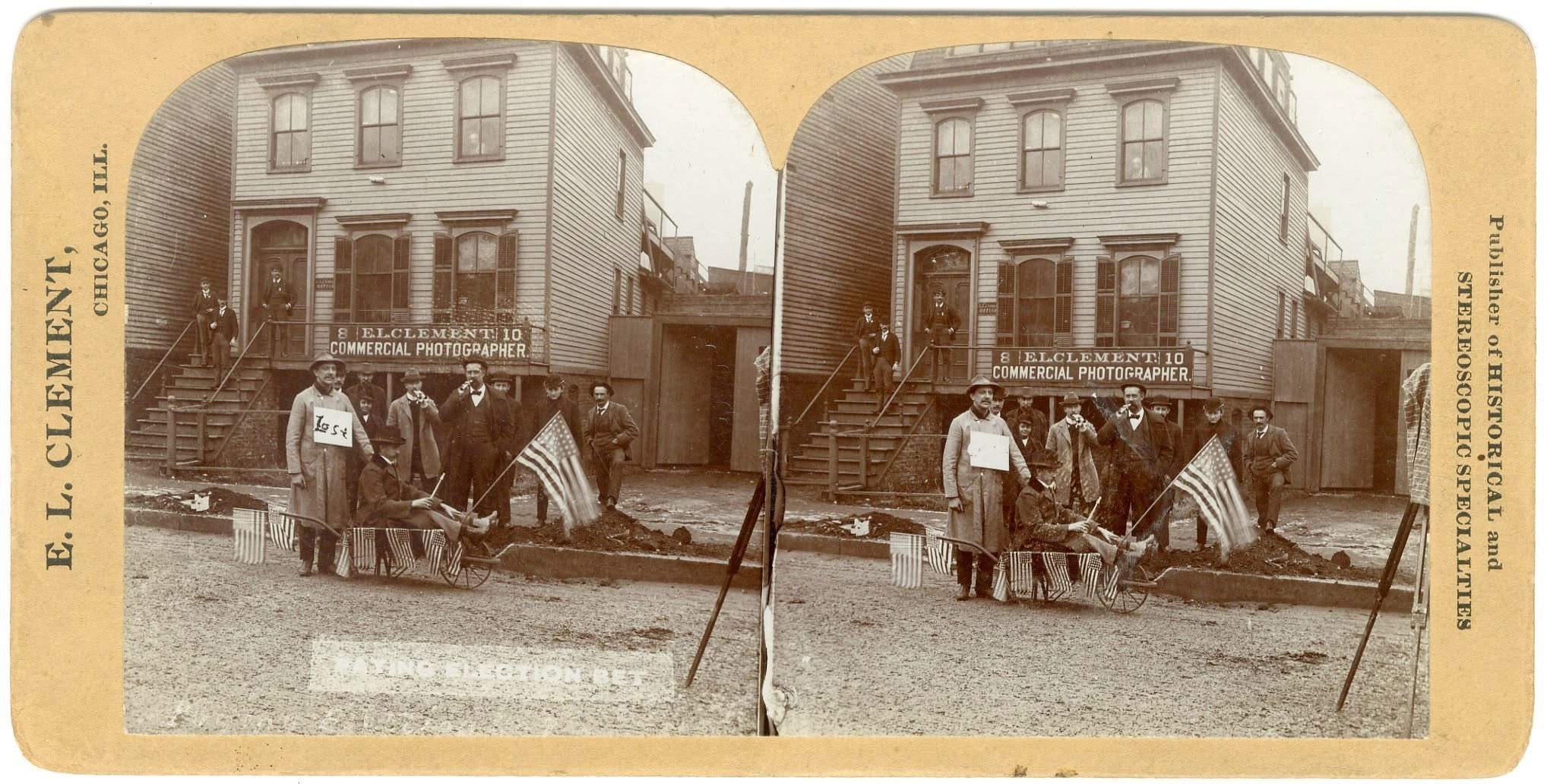
Paying election bet
Stereoview
Jeffrey Kraus Antique PhotographicsThis photograph was taken in front of the "E.L. Clement. 10 - Commercial Photographer." studio.
(Gemini AI generated text, 3 November 2026)
In 19th- and early 20th-century America, "Paying an election bet" refers to a widespread cultural tradition where individuals placed public, non-monetary wagers on political election outcomes—usually local, gubernatorial, or presidential races—with the loser required to perform a bizarre, embarrassing, or physically grueling stunt in public.
When photographers captured and sold images bearing captions like "Paying the Election Bet" (frequently issued as stereoviews, cabinet cards, or later real photo postcards [RPPCs]), they were documenting the celebratory, carnivalesque ritual that concluded intense political campaigns.
Why People Made These Bets
During the 19th century, political engagement in the United States was deeply partisan, intensely tribal, and organized around vibrant public spectacles—such as parades, torchlight rallies, and political clubs (e.g., the Wide Awakes). Betting was an inescapable facet of this culture:
Evading Anti-Gambling Laws: Many states and municipalities had strict statutory bans or moral stigmas against gambling for cash on elections. Wagering labor, dignity, or bizarre tasks bypassed legal prohibitions while maintaining high stakes.
Civic Pride and Partisanship: A wager was the ultimate public display of ideological confidence. Backing one's candidate with personal comfort or reputation proved party loyalty.
Public Catharsis: Once an election ended, fulfilling the wager served as communal street theater, defusing high partisan tension into shared civic humor and town-wide spectacle.
Common Election Bet Stunts Documented in Photographs
Photographs labeled with this phrase usually depict one of several iconic tropes:
The Wheelbarrow Push: The single most famous election forfeit. The loser had to wheel the winning bettor (or a symbolic object, like a barrel of flour, a pig, or campaign effigies) down the town’s main street for a specified distance—often several miles between neighboring towns.
The "Goat Cart" or Ridiculous Vehicle: Losers were photographed riding children's tricycles, riding backward on donkeys, or being hitched to carts and pulled like draught animals.
Sartorial Humiliation: Losers were forced to wear outrageous costumes, walk in women's dresses, wear clown outfits, or wear the opposing party's campaign regalia while carrying sandwich boards declaring their defeat.
Personal Grooming Forfeits: Losers frequently agreed to shave off their prized 19th-century beards, shave only half of their face or head, or vow never to cut their hair or beard until their defeated party reclaimed the White House.
Menial Public Labor: Common forfeits included rolling a peanut or a walnut down the sidewalk using only one's nose, shining the winner's shoes on the courthouse steps, or chopping wood in public view.
The Role of the Camera
As commercial photography boomed in the latter half of the 19th century, studio and itinerant photographers capitalized on these spectacles:
Proof of Settlement: A photograph served as binding proof and formal receipt that a bet had been honorably fulfilled.
Commercial Souvenirs: Photographers produced stereoviews and cabinet cards of the stunt to sell to townsfolk, local political party headquarters, and newspapers, turning a local novelty into lasting popular print culture.
LL/132655