Southworth & Hawes1850 (ca.)
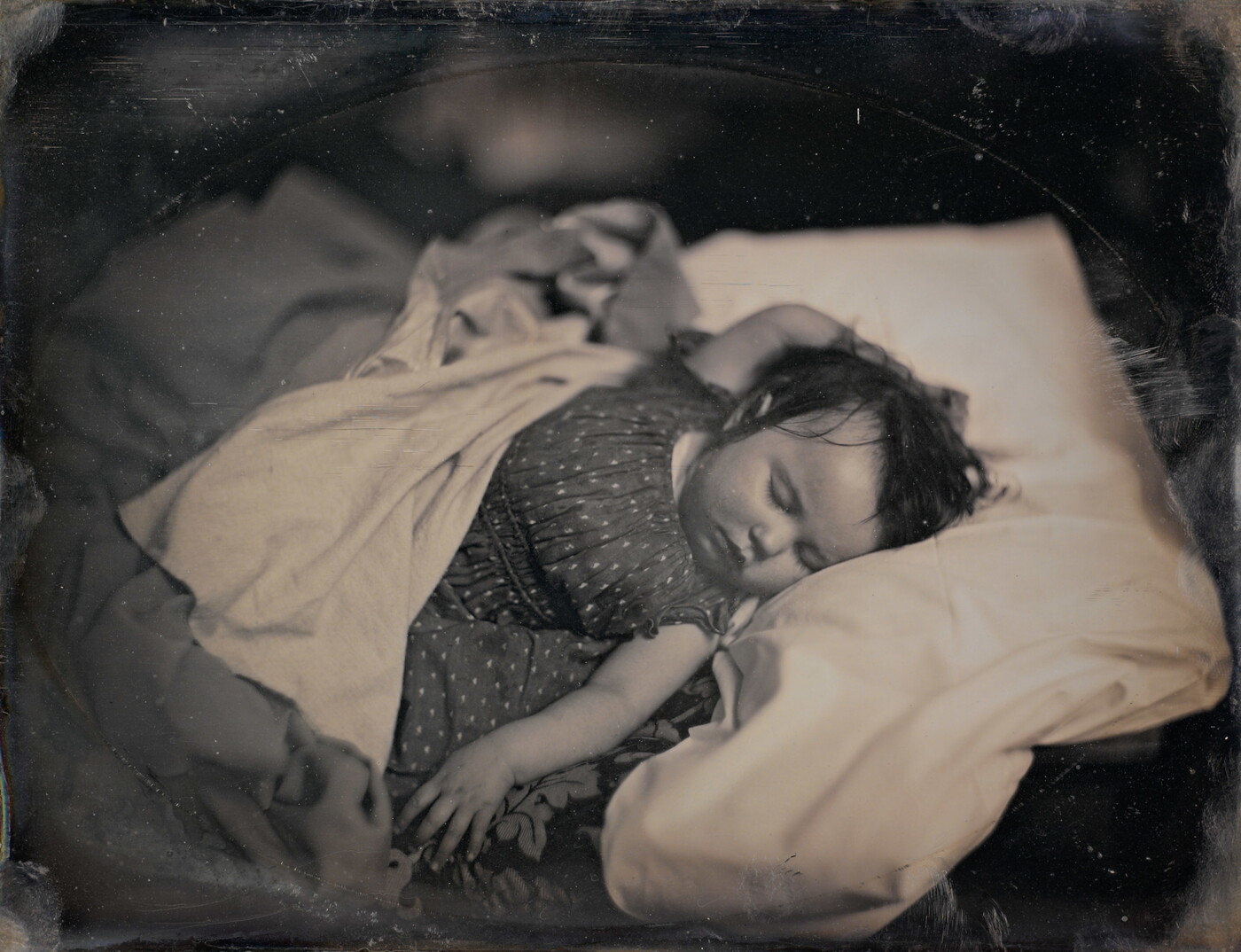
[Child, probably Alice Hawes, asleep]
Daguerreotype, whole plateAmon Carter MuseumAccession number: P1999.12
(Curatorial description, accessed: 7 March 2026)
Only a few years after the invention of the daguerreotype, Southworth and Hawes opened a studio in Boston that became one of the most important centers of early American photography. It was well-known for its daguerrean portraiture, which required sitters to be motionless for 10 to 15 seconds to produce unique images of wide tonal range and sharp clarity.
This young child is probably Alice, the firstborn of Hawes and his wife, Nancy Southworth Hawes. The photographer took advantage of his daughter’s stillness to create a charming portrait that captures childhood’s untroubled sleep and the tenderness of a parent’s gaze. At the time, this image would have reminded viewers of postmortem images of children, tragically common in a period of high infant mortality rates, emphasizing even more the vitality of Alice’s relaxed face and posture.
Text taken from the
Carter Handbook (2023).
LL/131962