Anna Atkins1851-1854
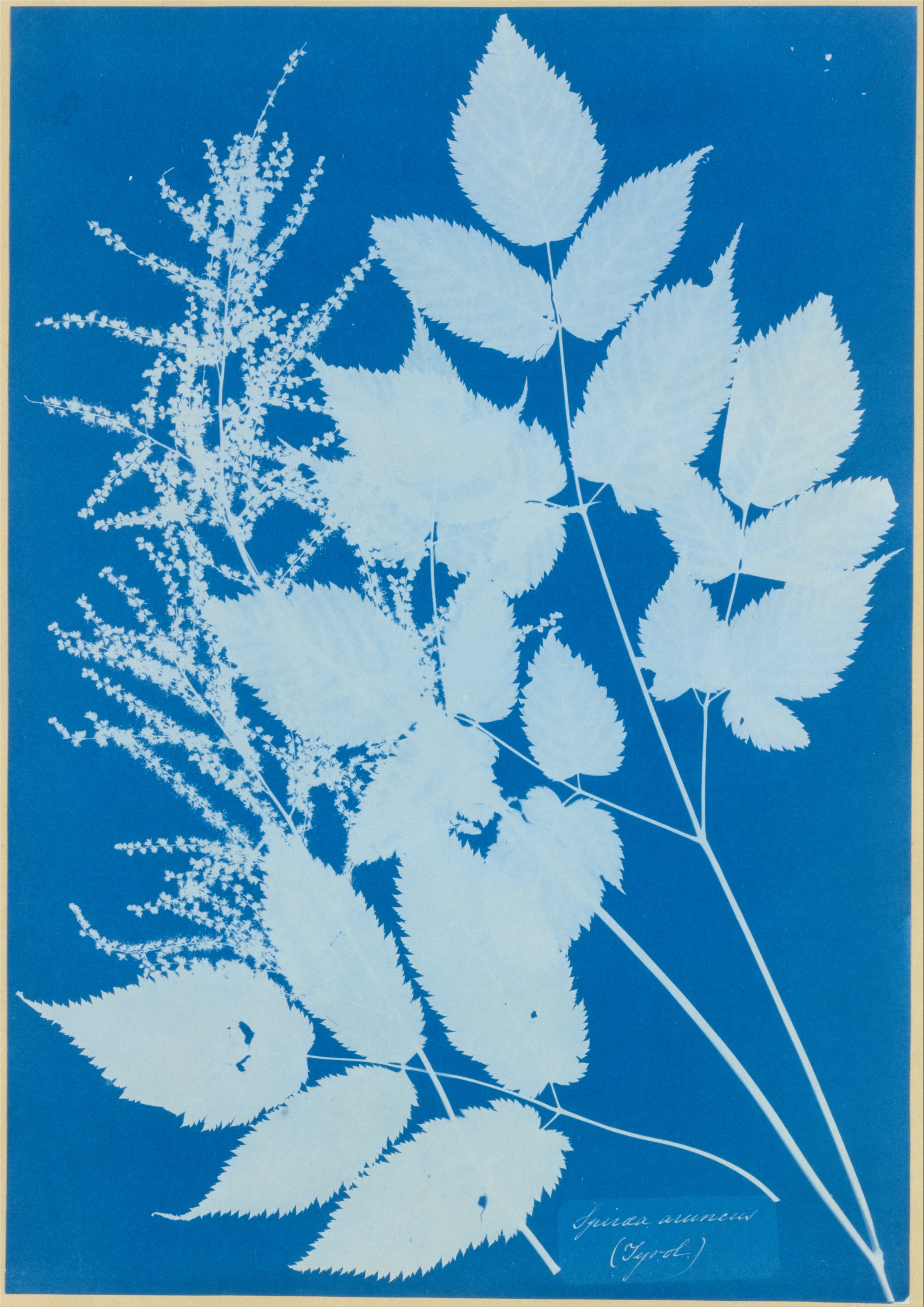
Spiraea aruncus (Tyrol)
Cyanotype35.1 x 24.6 cm (13 13/16 x 9 11/16 ins)
Metropolitan Museum of ArtPurchase, Alfred Stieglitz Society Gifts, 2004, Accession Number: 2004.172
Curatorial description (Accessed: 10 January 2018)
This botanical study is the first work by the British artist Anna Atkins and the earliest photograph by a woman to enter the Museum's collection. The cyanotype of several sprigs of a Tyrolean flowering shrub (Spiraea aruncus) is one of 160 plates removed in 1981 from a unique album, Cyanotypes of British and Foreign Flowering Plants, inscribed by the artist in 1854 as a gift to her family friend and collaborator, Anne Dixon, second cousin of the novelist Jane Austen. The cyanotype process, invented in 1842 by Sir John Herschel, is also commonly known as the blue-print process used (until recently) by architects to duplicate their line drawings.
Spiraea Aruncus (Tyrol) is a superb example of Atkins's cameraless photograms of algae and plant specimens that the artist herself gathered or received from other amateur scientists. A continuation of the longstanding tradition of botanical illustration in all media, it is directly related to the earliest cameraless studies by Atkins's family friend William Henry Fox Talbot, the inventor of paper photography. Combining rational science with art, the study is an effective, graphically bold image worthy of the daughter of the first Keeper of the Department of Natural History and Modern Curiosities at the newly established British Museum.
LL/79870